
- 2026-11-02
- Posted by: kimsite
- Categories: Insights, Volume Analysis

A Tale of Two Markets: New Era vs. Old Era
It was the best of months for the brass, the worst of months for the generals. It was a season of revival in the old economy, a season of retreat in the new. With a nod to Charles Dickens, October has delivered A Tale of Two Markets. Our two cities are not separated by a channel, but by a changing current of capital.
At the beginning of October, our original “Doji Know?” commentary identified hesitation across the battlefield. The generals were flashing dojis near resistance, while the equal-weight lieutenants and dividend brass commanders’ dojis tested support foundations. Similar candles, different coordinates, and very different implications. The question was whether those pauses would become a change of command. October’s ledger has now answered.
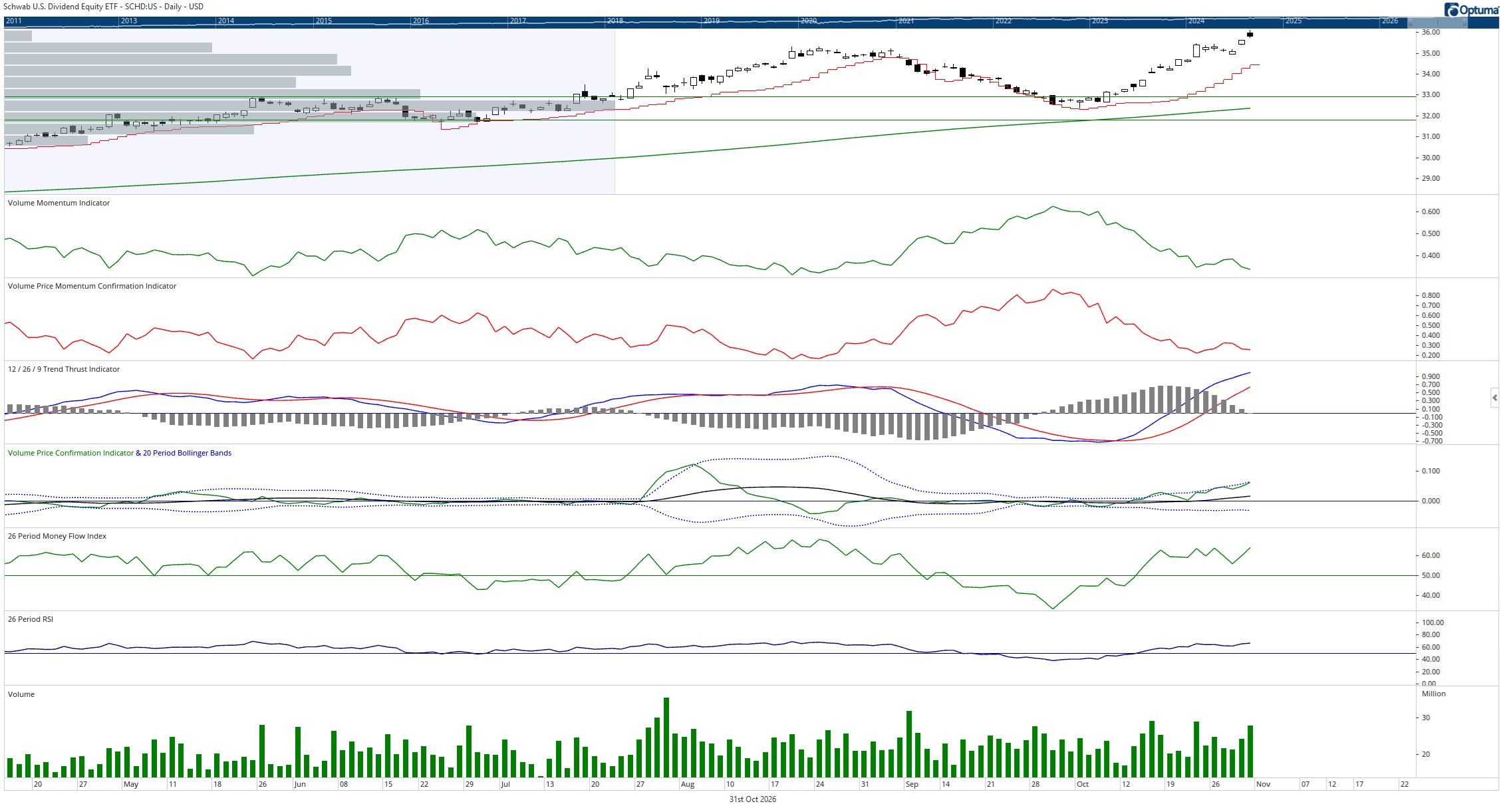
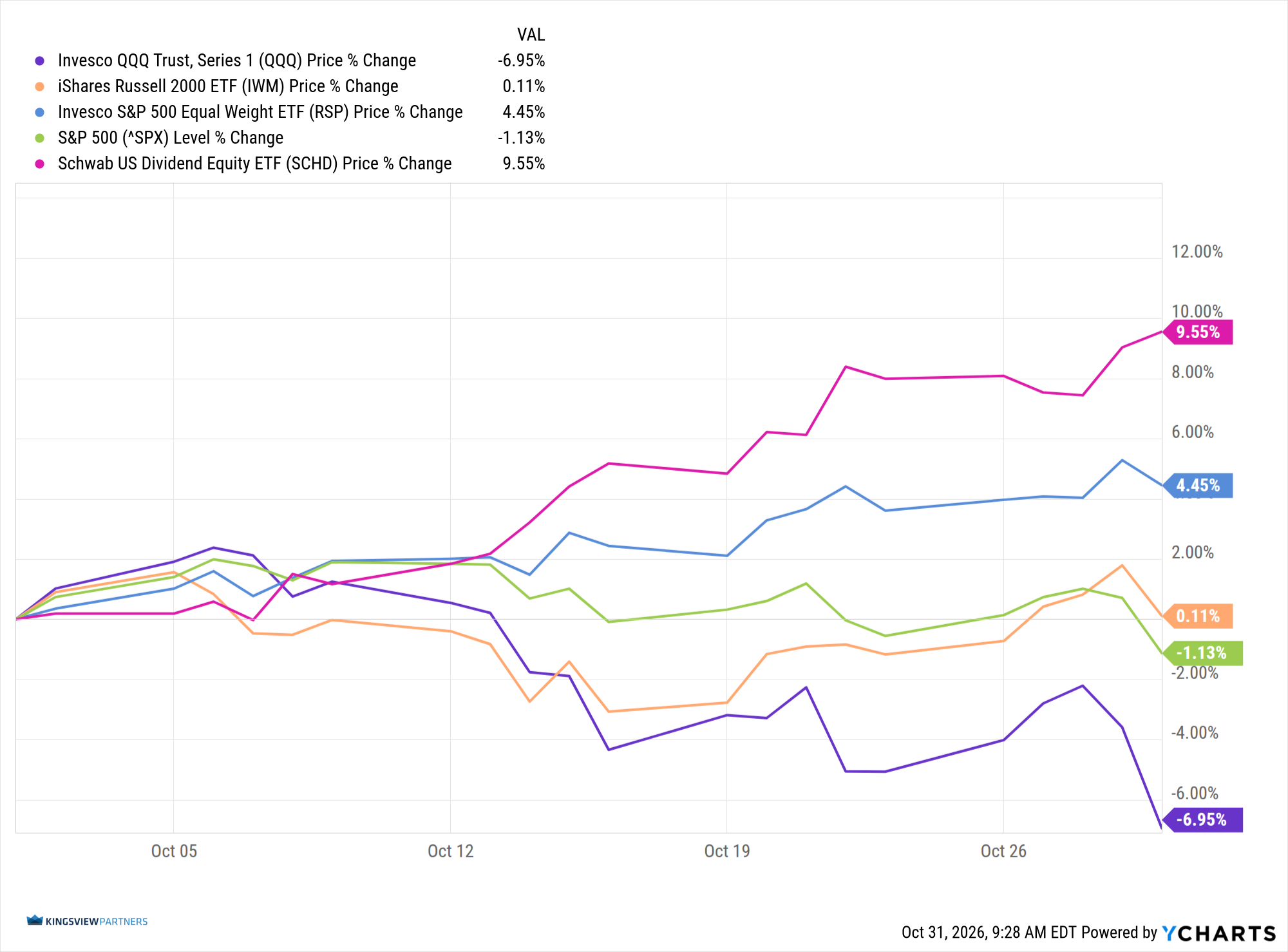
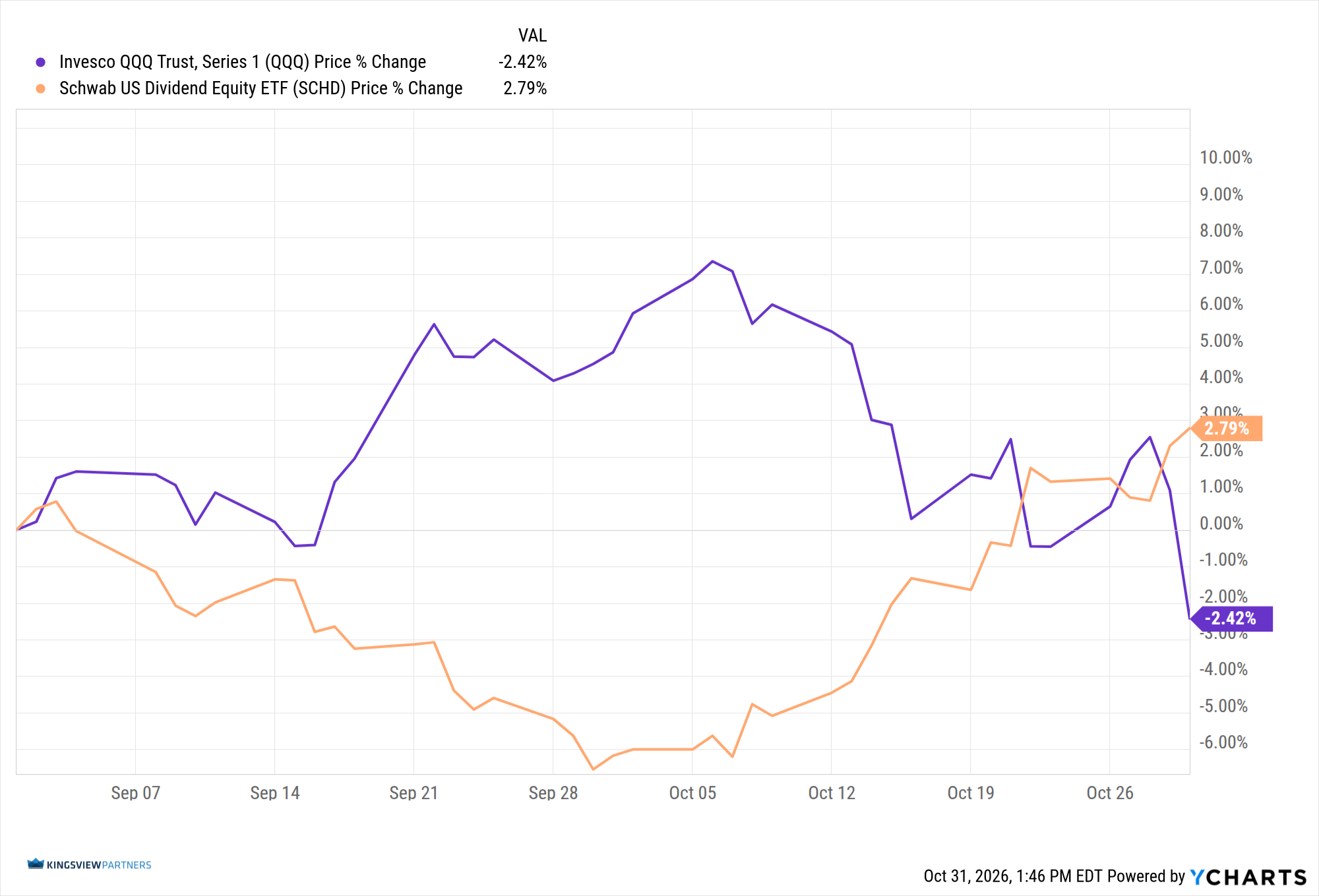
In September, the generals, represented by the Invesco QQQ Trust, Series 1, advanced 4.86%, while the dividend brass commanders, represented by the Schwab U.S. Dividend Equity ETF, surrendered -6.18%. October reversed those fortunes. The generals declined -6.95%, while the brass advanced 9.55%. September’s celebrated commanders spent October defending their positions, while the previously overlooked formations marched onward to new all-time highs.
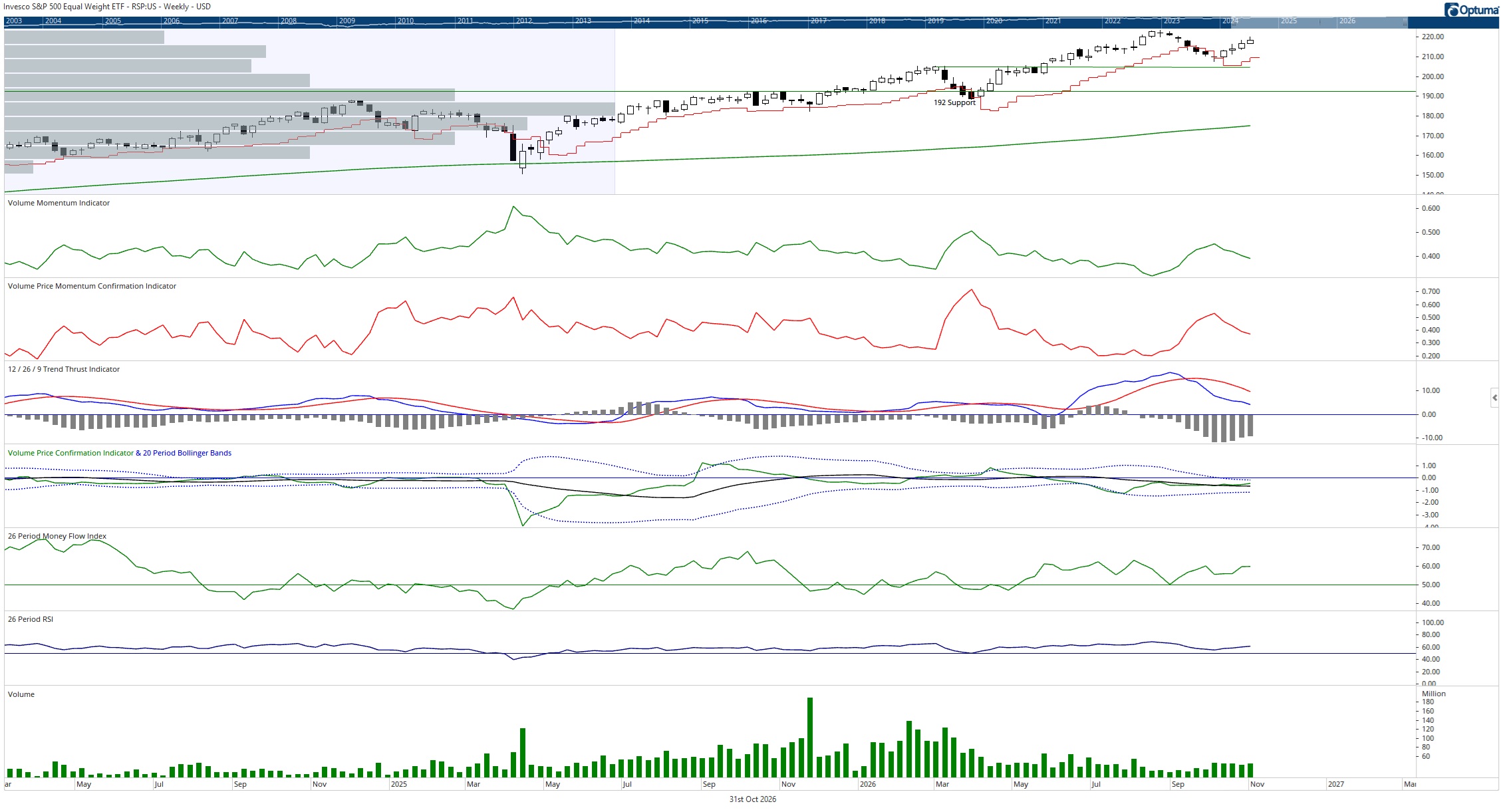
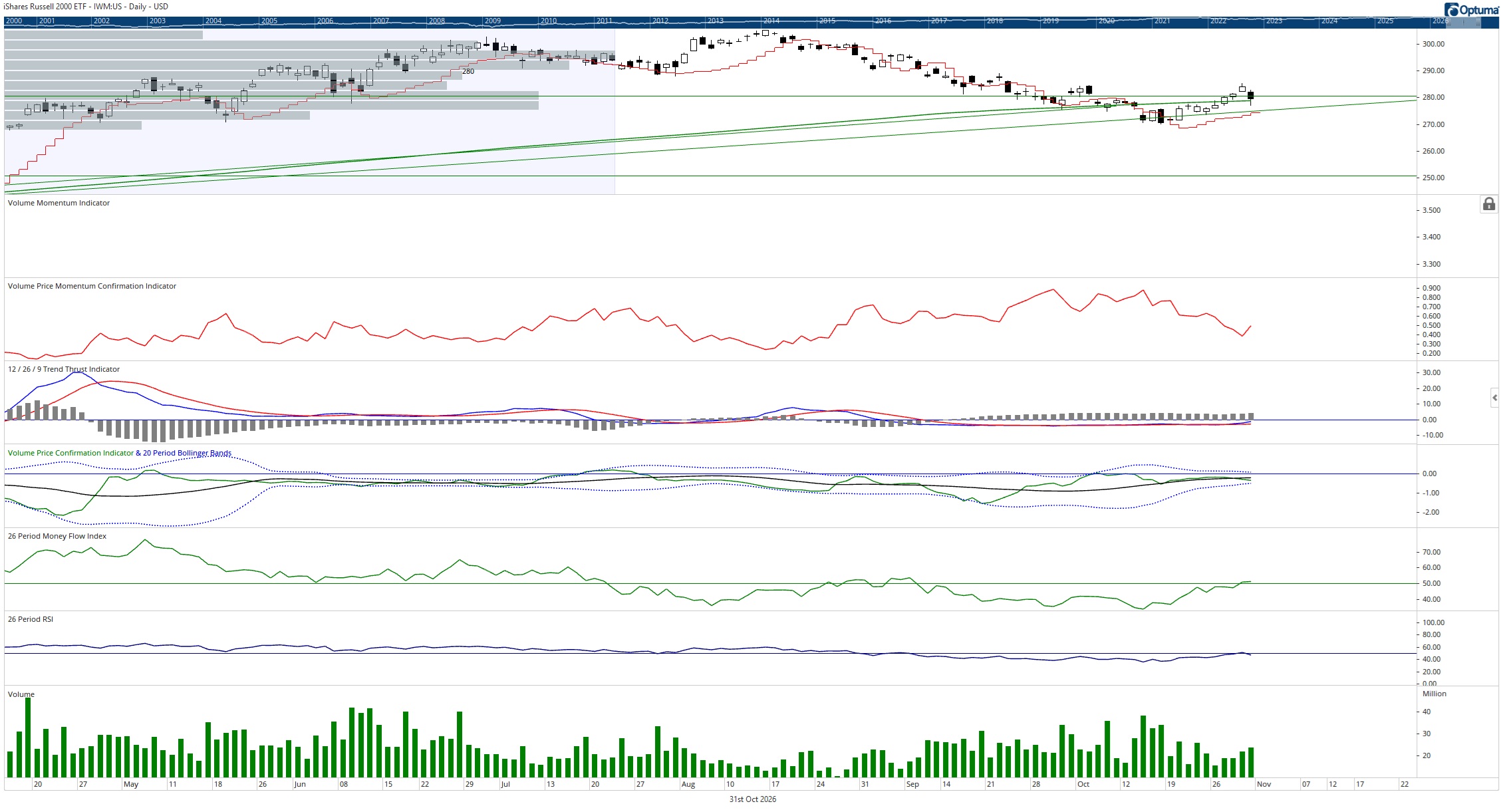
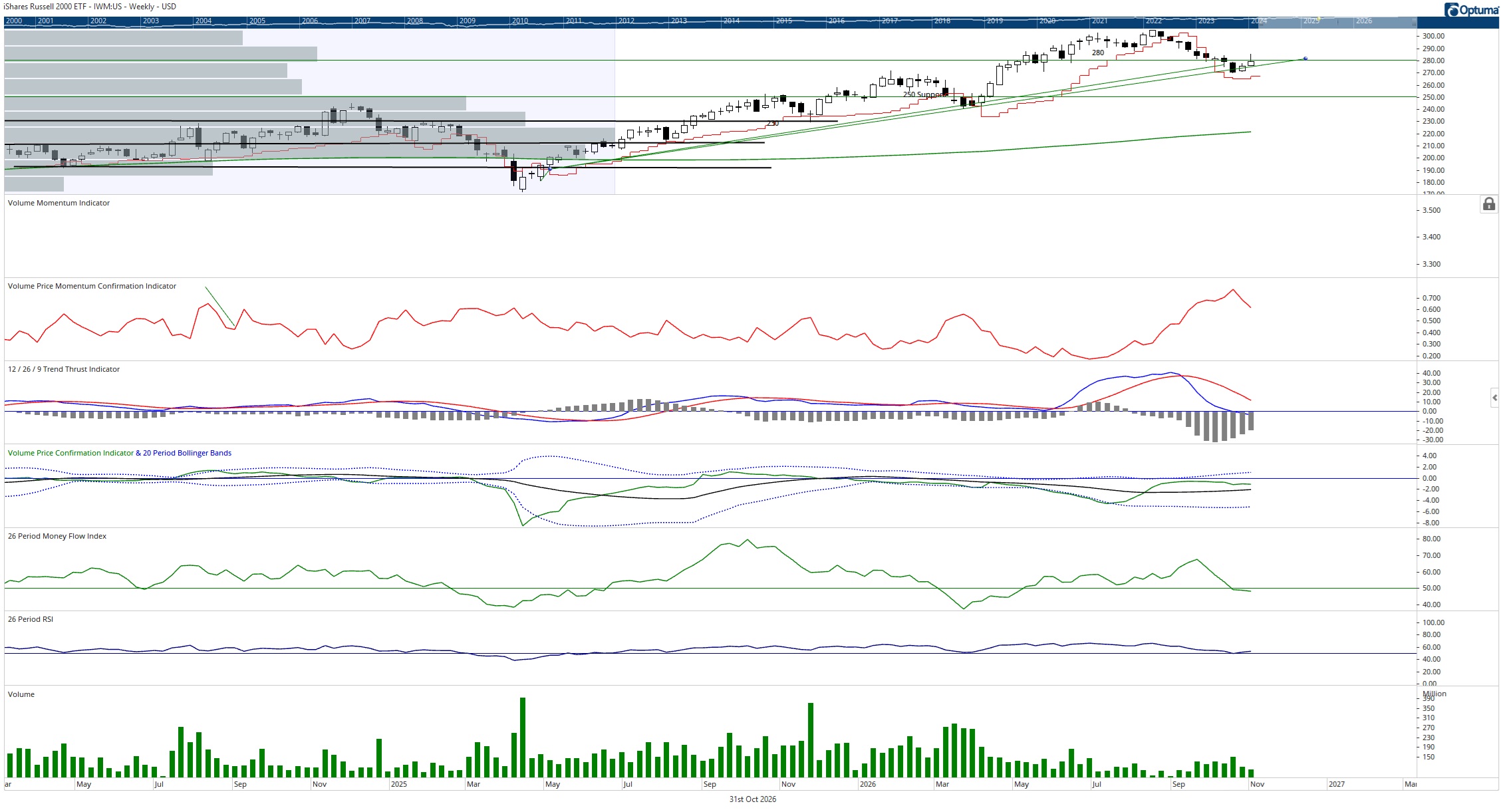
The equal-weight lieutenants, represented by the Invesco S&P 500 Equal Weight ETF, joined the October advance with a 4.45% gain. The small cap troops, represented by the iShares Russell 2000 ETF, recovered enough to finish the month slightly positive at 0.11%. Meanwhile, the capital-weighted S&P 500 declined -1.13%. One market, two economies: old versus new, each with considerably different experiences depending upon which economy investors were stationed.
Doji know? The anticipated change in leadership occurred. The candles did not guarantee the outcome, but their placement flagged an important possibility, and subsequent price action confirmed it. October gives us reason to acknowledge that reading of the field. It does not give us permission to dismiss the next warning.
The Week’s Campaign: The general’s bounce off support met with heavy artillery
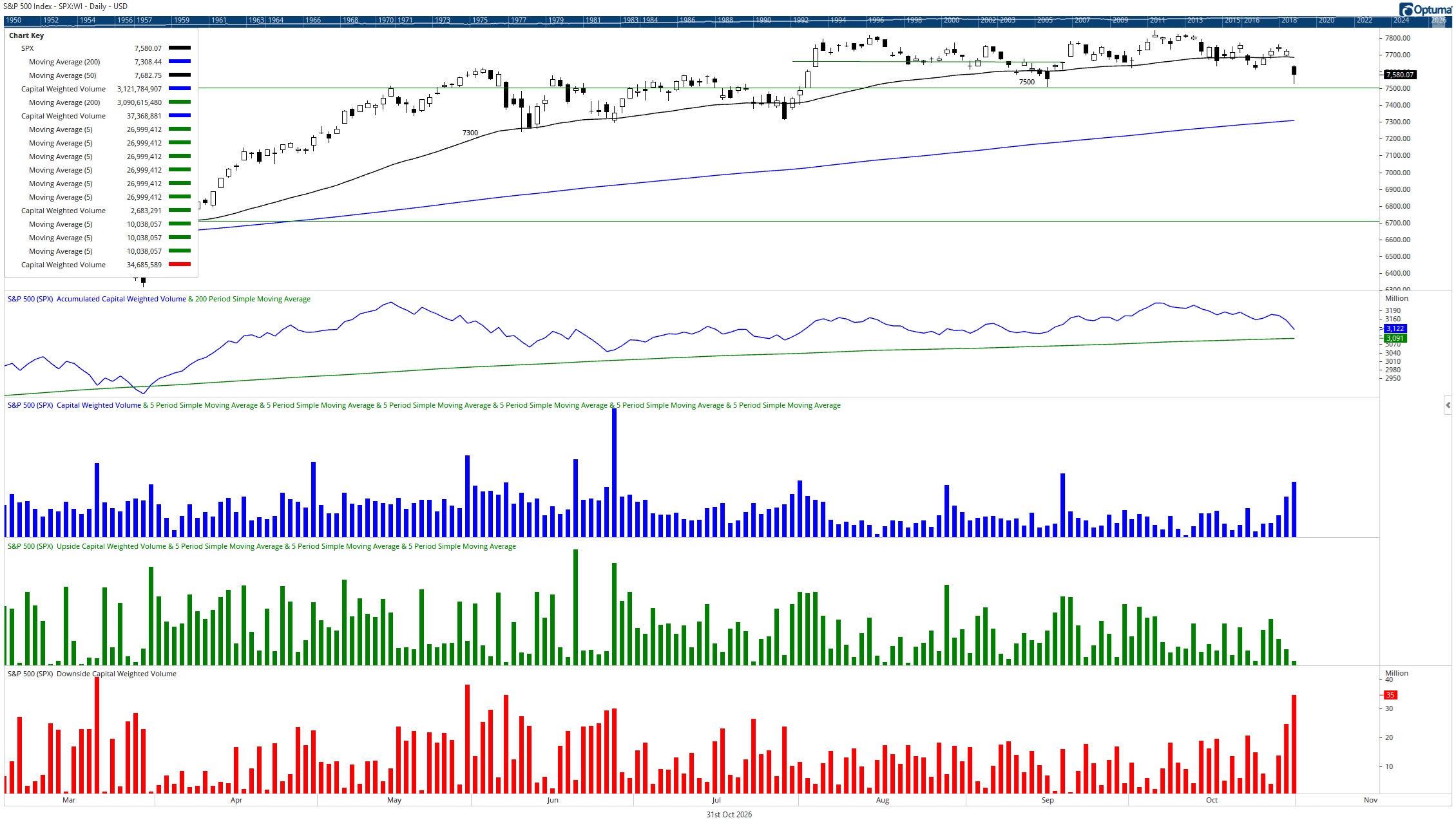
Led by the generals, the S&P 500 began the week with an encouraging advance on light volume. Monday established the offensive, Tuesday carried the index back above its 50-day moving average, and Wednesday brought the advance into resistance near 7,760. Then the tone changed.
Thursday opened with a downside gap. Although the S&P 500 recovered to finish near its daily high, nearly 80% of Capital Weighted Volume was directed to the downside. The closing recovery looked more reassuring than the activity beneath it. Friday removed much of that reassurance. The bears ended the week with an exclamation point, registering approximately 93% downside Capital Weighted Volume on the strongest downside volume since September 18th. The early advance had arrived with a light escort. The retreat brought heavier artillery.
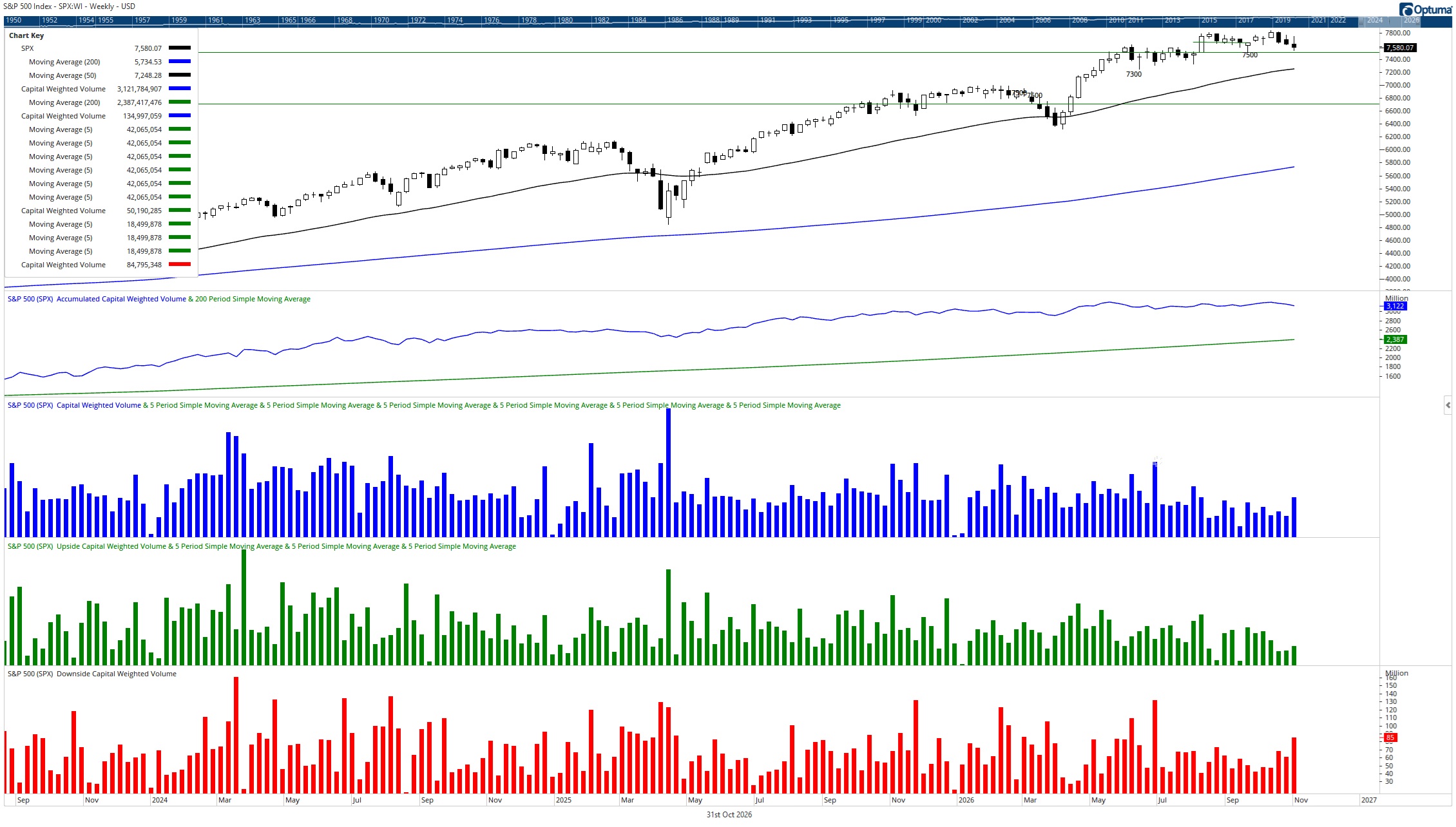
For the week, approximately 63% of both Capital Weighted Volume and Capital Weighted Dollar Volume was directed to the downside, with total activity above average. The S&P 500 declined -0.57% to 7,580.07, retaining the important 7,500 support position but finishing beneath its 50-day moving average near 7,683. That average is once again ground to reclaim, with 7,760 remaining an overhead checkpoint.
Here’s the important but often overlooked distinction: a light volume pullback can represent a pause. A retreat accompanied by increasingly concentrated downside activity deserves more attention. Friday did not establish the outcome of the entire campaign, but it materially strengthened the bears’ latest field report.
Recalled to Life: The Old Era Takes Command
In Dicken’s terms, “Recalled to Life” fits the broader market’s October revival. The dividend brass and equal-weight lieutenants were not merely surviving the generals’ weakness. They were beginning to establish their own advance.
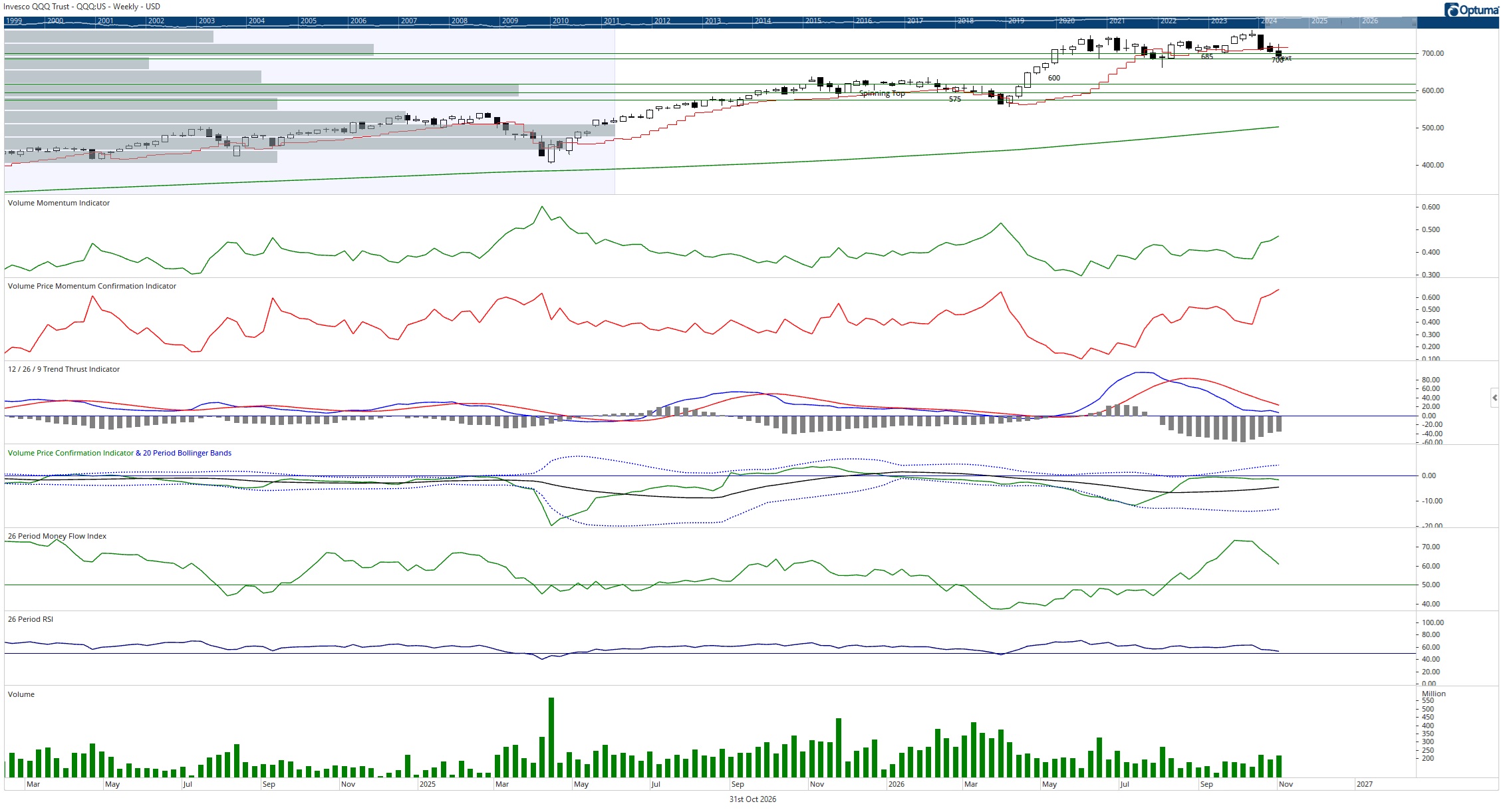
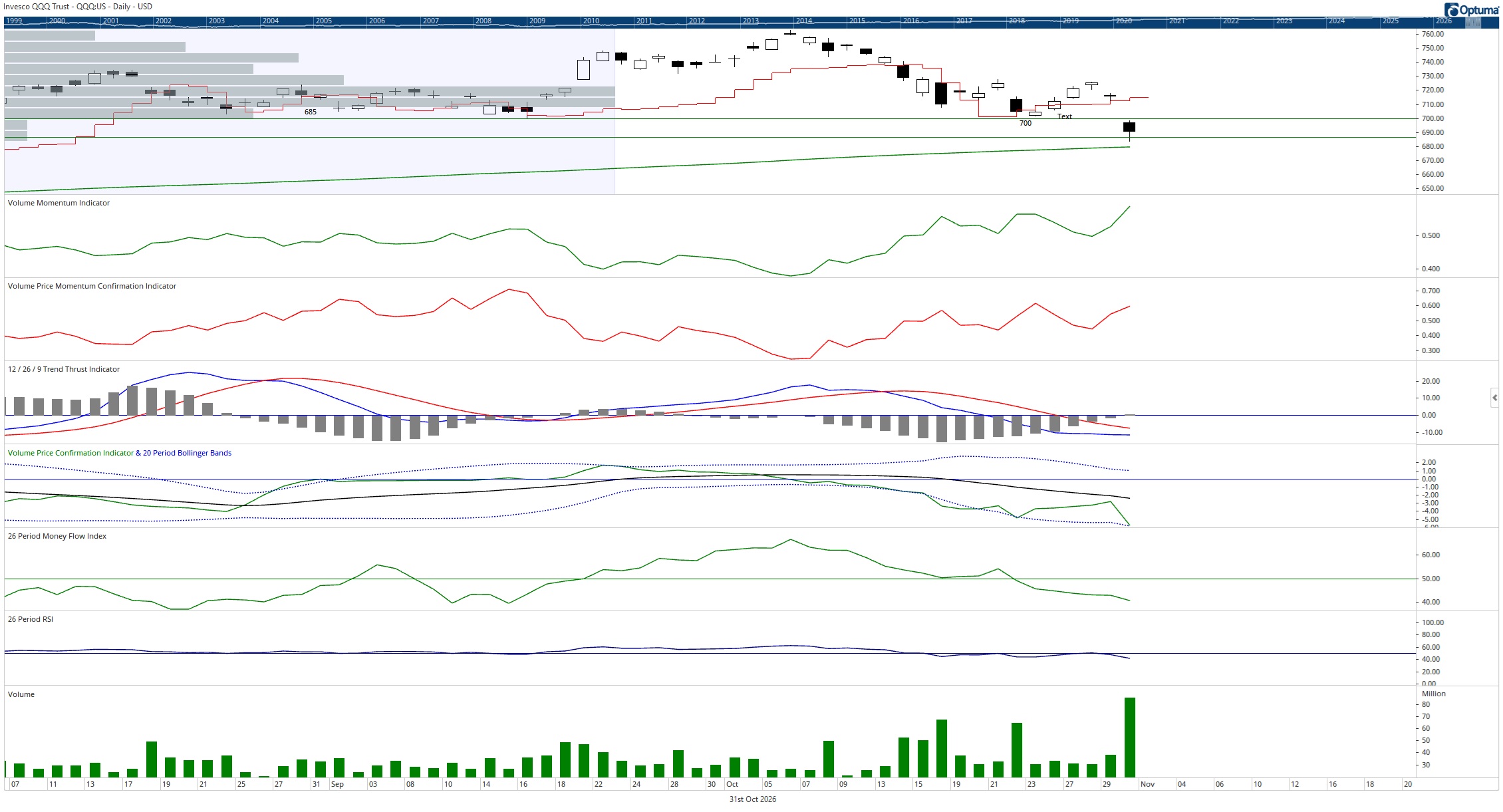
The generals attempted a comeback early in the week. After finding a bid near 700 the previous Friday, they rallied through Wednesday before meeting resistance near 725. The recovery came on light volume. Thursday brought a reversal, followed by another downside gap Friday on their heaviest volume since June 9.
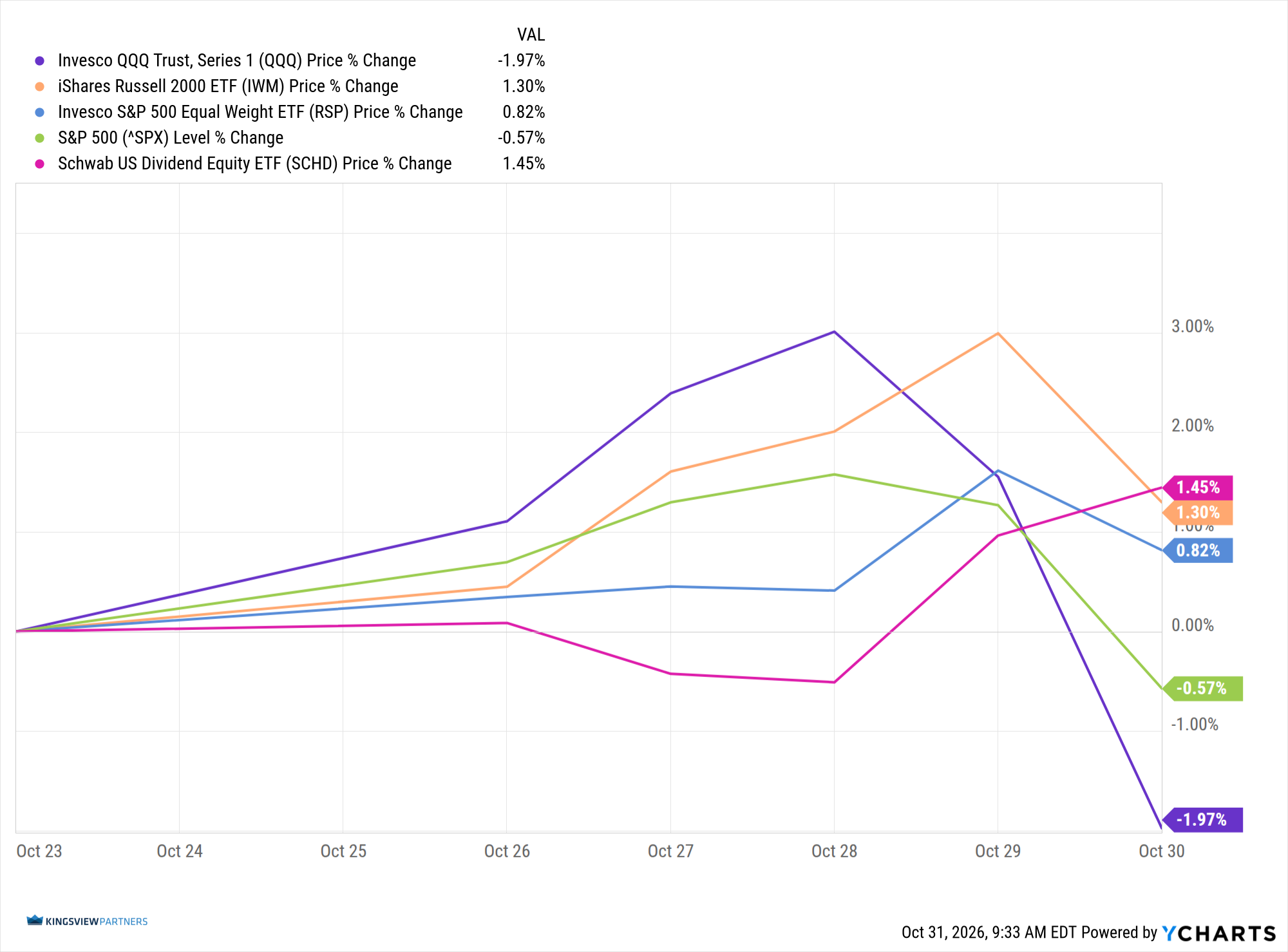
By the close, the generals had lost -1.97% for the week and surrendered the first defensive position at 700. They tested and rebounded from the more important 685 area, with rising trend support near 680 providing the next line of defense. Holding those positions could preserve the chance to regroup. Recovering 700, and eventually 725, may be needed to demonstrate that the retreat is losing force. The generals have not abandoned the battlefield, but they are defending the gates rather than leading the charge.
The troops fought to remain relevant. They advanced through Thursday, crossing 280 and approaching secondary resistance near 285. Friday’s counterattack pushed them back toward 279, leaving a 1.30% weekly gain yet an unresolved battle around the 280 line. Their recovery is encouraging, yet briefly crossing a barricade is not the same as securing it. Sustained trading above 280, followed by progress through 285, would give the broadening theme a more dependable infantry.
The equal-weight lieutenants added 0.82% and continued working toward their former highs near 225. Their advance provides an important contrast with the capital-weighted index. The same general universe of large companies is telling a different story when command is distributed more evenly rather than concentrated among the Nephilim.
The dividend brass commanders again led the weekly charge, gaining 1.45%. After beginning the week on weaker footing, they finished with a strong advance that extended their all-time highs. The old guard has not simply returned to duty. It has assumed command of carrying out the campaign.
Two Cities, a Changing Relationship
The brass and generals have developed a recent yin-and-yang relationship reminiscent of the technology-and-energy contrast discussed in prior commentaries and highlighted in our Market Outlook. Early in the week, the generals advanced while the brass hesitated. When the generals lost momentum, the brass found it. This is an observed rotation, but may not be a permanent treaty between opposing factions.
Our Second Half Outlook made a related distinction. Many old-era sectors have been declining less, or even advancing, during New Era declines this year. Can weakness in technology leadership be absorbed without becoming a broad market bear phase? That possibility fits the current contrast, but resilience should not be confused with reliable protection.
A healthier market does not require the AI trade to disappear. It requires the market to become less dependent upon it. Leadership can spread from technology producers toward infrastructure providers, adopters, and established businesses that may benefit from productivity improvements. The two cities could trade with one another rather than requiring one to fall for the other to prosper.
That remains central to our And Then There Were None framework. The concern was concentrated leadership losing sponsorship, not an automatic declaration that every regiment must fall with the generals. The constructive alternative of our And Then There Were Some campaign is that capital is finding capable replacements across a wider field. October has offered additional evidence of that alternative. Yet a stronger city on one side of the market does not make the entire kingdom secure.
The Golden Thread: Participation and Capital
The NYSE Advance Decline Line added encouragement to the broadening theme this week, moving higher and breaking above the containment established by the wide bars that had encompassed October. That is progress beyond last week’s recovery within the range. More of the field is beginning to participate, even as the headline index struggles.
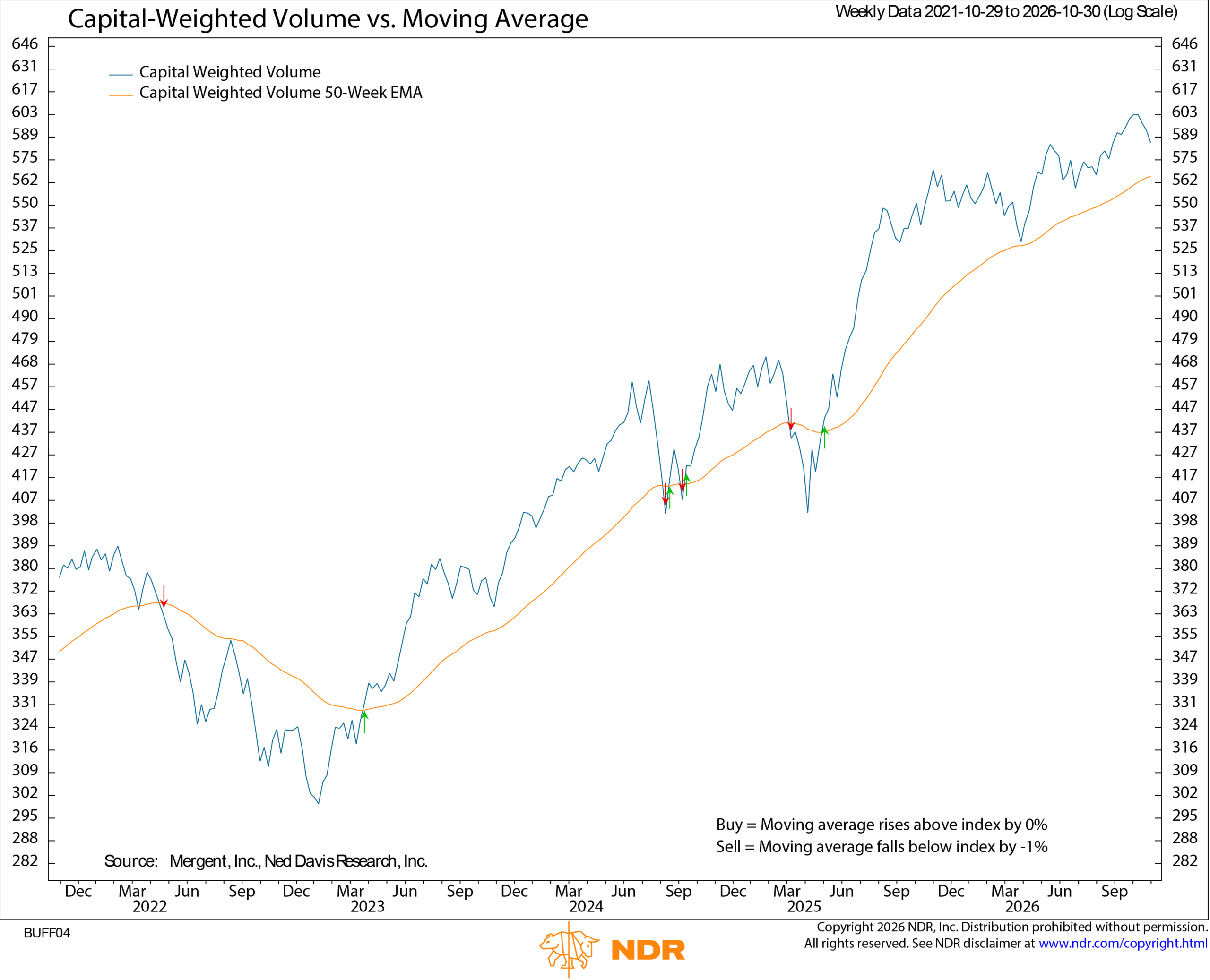
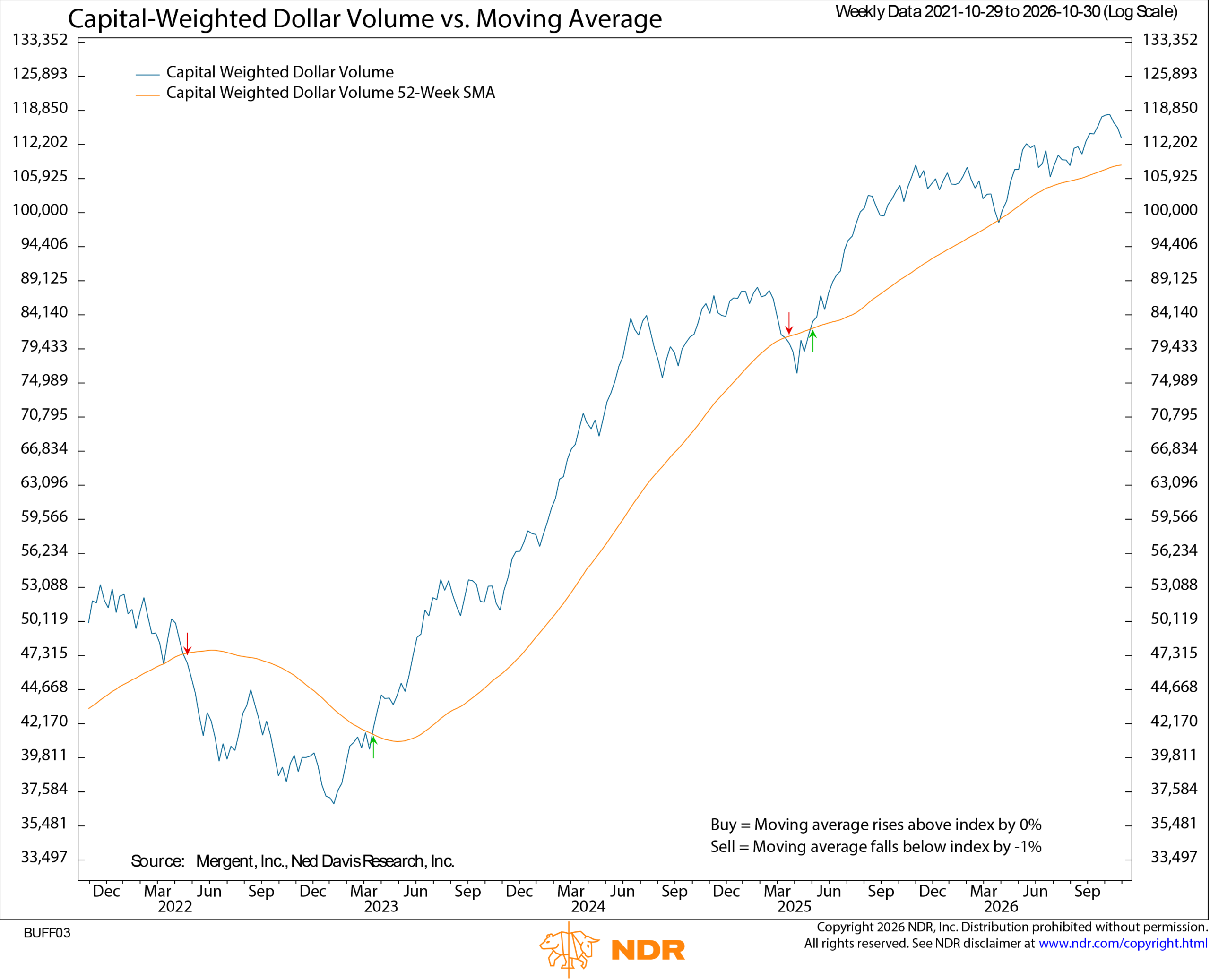
Capital sponsorship, however, is moving in the opposite short-term direction. The shorter-term trends of both accumulated Capital Weighted Volume and Capital Weighted Dollar Volume are now clearly declining. Both remain above their rising longer term trend references, including the 50-week exponential moving average for Capital Weighted Volume and the 52-week simple moving average for Capital Weighted Dollar Volume. Thus, the underlying defenses remain standing, but the distance between the advancing support lines and the retreating indicators is narrowing.
Here lies the central tension between our two markets: participation is improving while aggregate capital sponsorship is weakening. Broadening is a constructive development. Persistent distribution may still undermine it.
As emphasized in our Outlooks, the important distinction is whether redistribution represents a durable handoff to broader leadership or whether selling eventually overwhelms the receiving formations. Improving breadth deserves respect, but it cannot simply cancel a heavy downside volume report. Price is the market’s testimony. Volume is the polygraph. This week, the broader ranks offered a more hopeful account, while the capital-weighted measures demanded further questioning.
Commodities at the City Gates
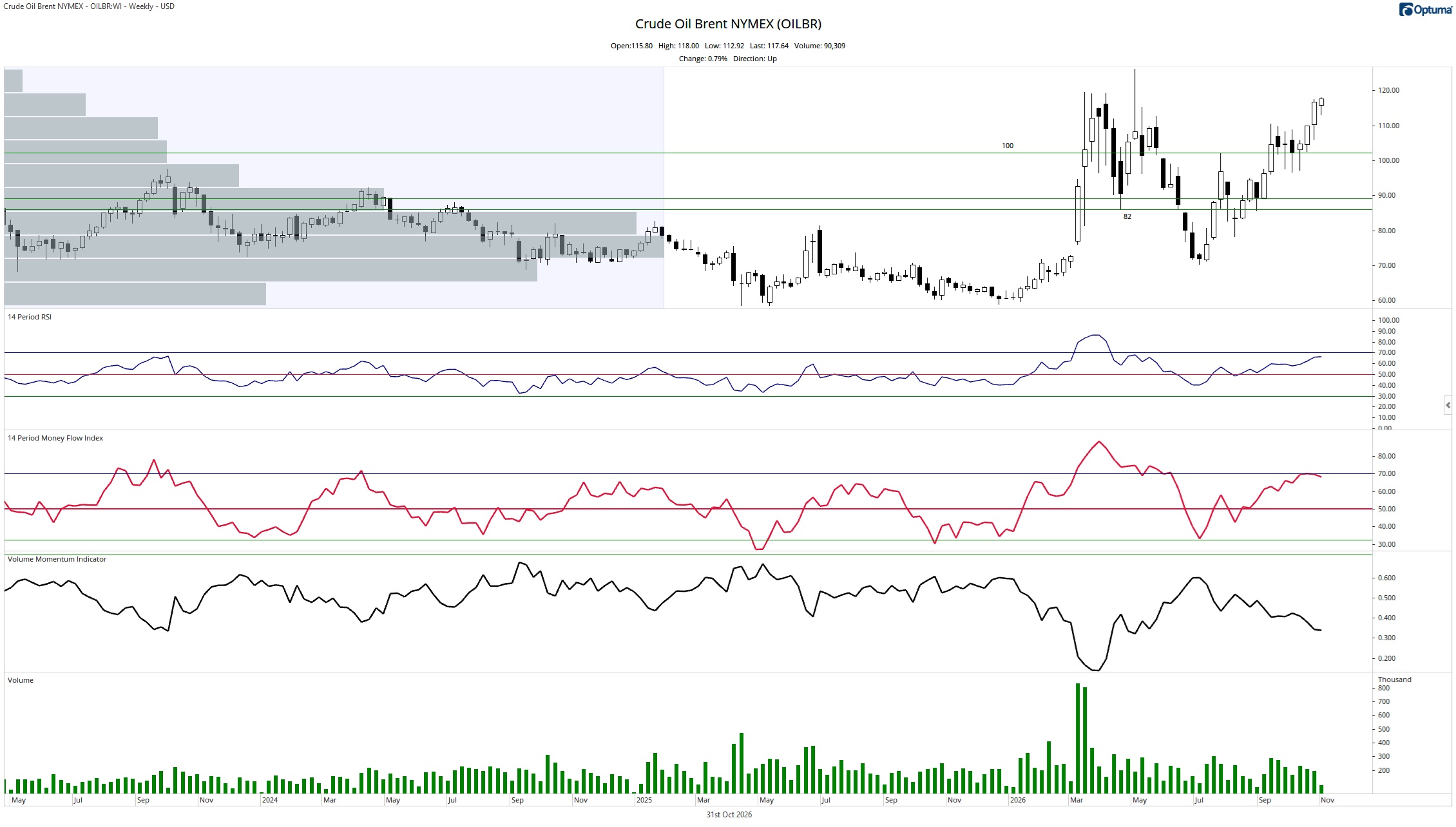
Brent crude finished near $117.64, its highest weekly close of the year, but the advance came on light volume. Oil is now approaching the upper boundary of its range and substantial resistance near $120. The energy scouts have reached the next gate. A sustained breakout would carry more weight if accompanied by stronger participation.
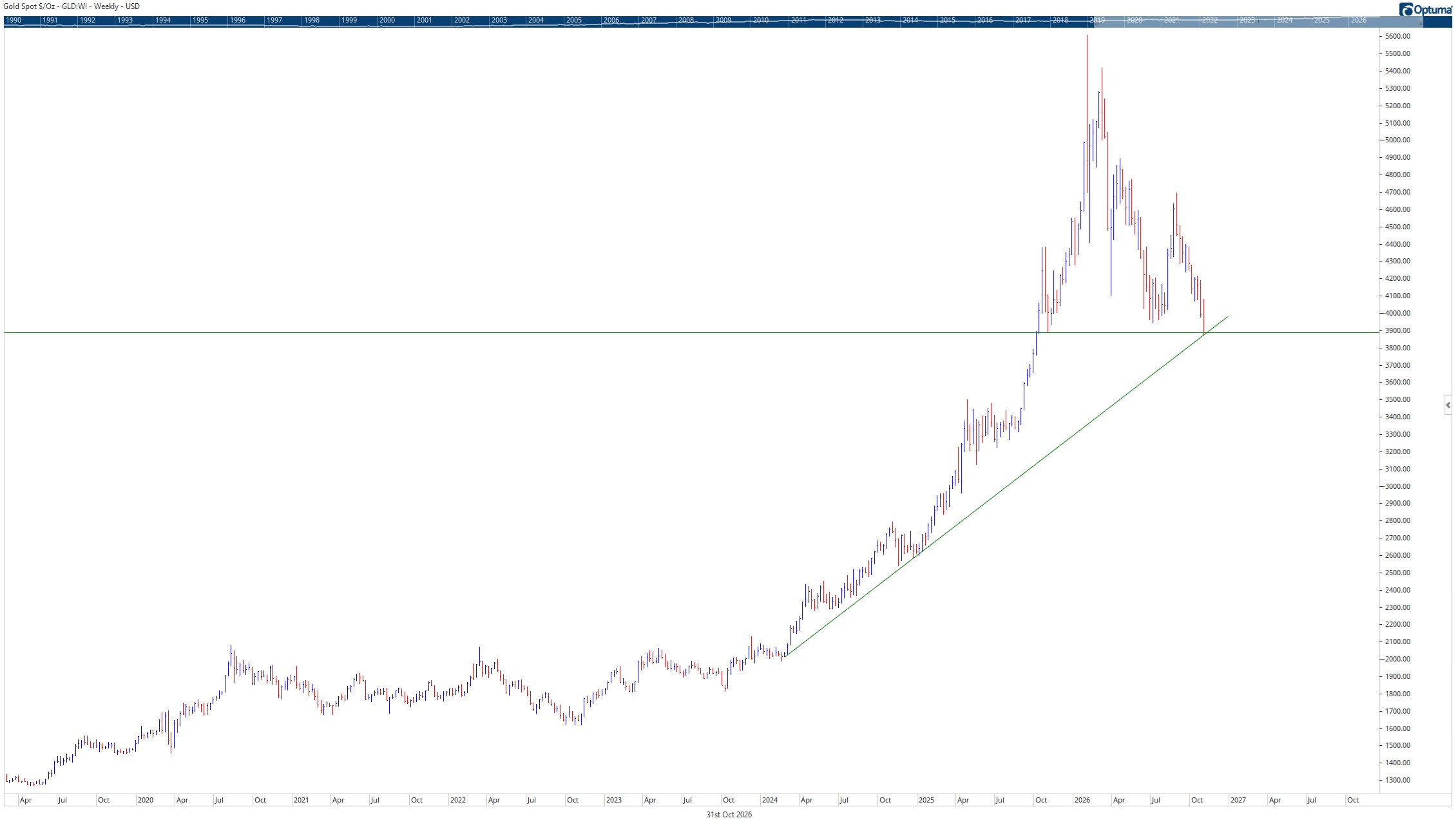
Gold traveled in the opposite direction, breaking beneath $4,000 and retreating toward the critical $3,900 area, where horizontal support and its rising trend line converge. That intersection gives the gold bugs two defensive positions at the same location. Holding and recovering from that zone would help preserve the larger structure. A sustained break would shift attention toward the next major support area near $3,600.
Silver offered less resistance, slicing through $55 like a hot knife through butter. That former support becomes an important recovery level. Without a durable reclaim, the next major support zone in our framework is near $40. That is a downside reference, not an inevitable destination, but the distance between those positions underscores why failed support deserves attention before a retreat becomes a rout.
Risk Command:
October delivered the change of command suggested by our original doji observations. The generals weakened, the dividend brass revived, and the equal-weight lieutenants advanced. The market’s former supporting cast has become central to the story. That is a worthwhile victory for the reading of the evidence. Yet it is not a victory over future uncertainty.
This is a mature bull market. Its healthier path is a stronger core supported by broader participation and renewed capital sponsorship. The generals need not lead every advance, but a disorderly breakdown in the largest formations still threatens the units now gaining ground. Conversely, sustained strength in the brass, lieutenants, and troops could help the market absorb leadership change.
The immediate assignments are therefore practical. The S&P 500 needs to defend 7,500 and work back above its 50-day average. The generals need to preserve the 685 and, more importantly, the 680 trend line. The troops need to establish themselves above 280 rather than repeatedly contest it. The stronger, broader formations need to maintain their advances, while improving breadth must eventually be joined by stabilizing Capital Weighted Volume and Capital Weighted Dollar Volume.
A constructive resolution would bring the two cities closer together through wider participation and improving sponsorship. A more bearish adverse resolution would see concentrated selling spread into the very formations now providing support. Our responsibility is to distinguish those paths as the evidence develops, not to select a preferred ending and insist that the market follows the script. Careful listening and reading build market understanding, not influence.
Position sizing, diversification, concentration awareness, and predetermined risk thresholds remain more valuable than allegiance to either new-era or old-era outcomes. A successful earlier assessment should sharpen that discipline, not relax it.
As Dickens suggests, it is a far better thing to protect capital than to protect a prediction. October’s change of command deserves recognition. Risk management still gets the final word.
Grace and peace,
BUFF DORMEIER, CMT
Updated: 11/2/2026. Historical references do not assume that any prior market behavior will be duplicated. Past performance does not indicate future results. This material has been prepared by Kingsview Wealth Management, LLC. It is not, and should not, be regarded as investment advice or as a recommendation regarding any particular security or course of action. Opinions expressed herein are current opinions as of the date appearing in this material only. All investments entail risks. There is no guarantee that investment strategies will achieve the desired results under all market conditions and each investor should evaluate their ability to invest for the long term. Investment advisory services offered through Kingsview Wealth Management, LLC (“KWM”), an SEC Registered Investment Adviser.