
- 2026-10-19
- Posted by: Austin Pica
- Categories: Insights, Volume Analysis

Doji Know? Part III
Looking back at last week’s field report, most regiments flashed dojis, signaling indecision and the potential for change in the trend or countertrend. The generals’ doji tested resistance near the highs, while much of the broader field’s dojis tested support near the lows. The candles looked alike, but their placement on the battlefield told different stories. This week, change was delivered.
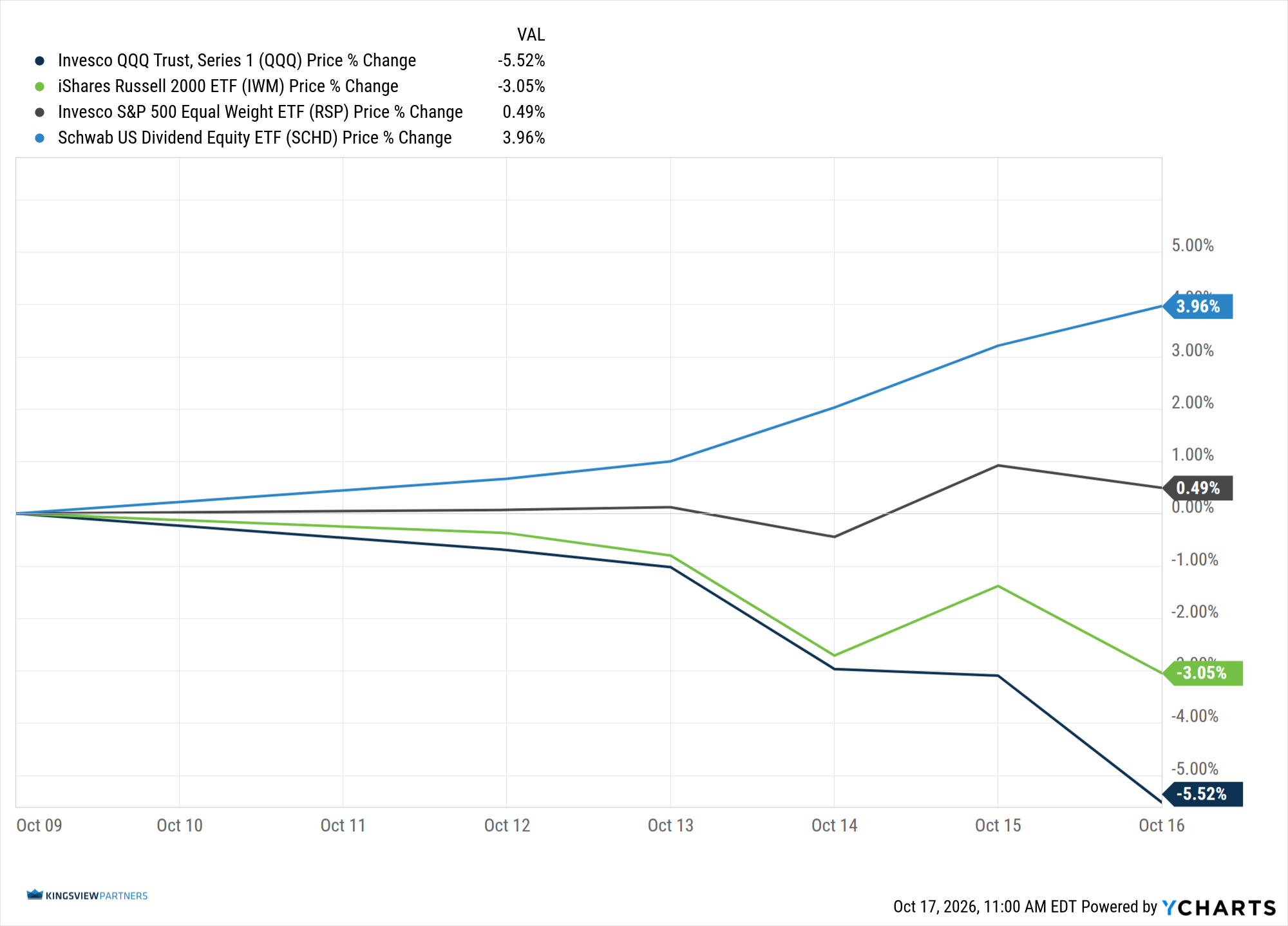
The generals surrendered ground, the dividend brass commanders counterattacked, and the equal weight lieutenants held their line. The small-cap troops, however, continued their retreat. What had been a market carried by its elite command suddenly found support from its broader core. The generals needed reinforcements, and this time the brass answered the call.
In this respect, the market remained a tale of two cities this week, but the commanding officers changed addresses. The mega cap generals absorbed heavy fire, the small cap troops broke formation, and the dividend brass commanders stepped forward to defend the field. The old economy’s broader ranks showed resilience while the new economy’s most celebrated leaders searched for firmer footing. This was not a unified retreat, but neither was it the coordinated advance the bulls would prefer. In the spirit of And Then There Were None, the question is no longer simply how many generals can keep marching. It is whether the rest of the army can hold the ground when those generals need cover.
The Supply Lines Grow Louder
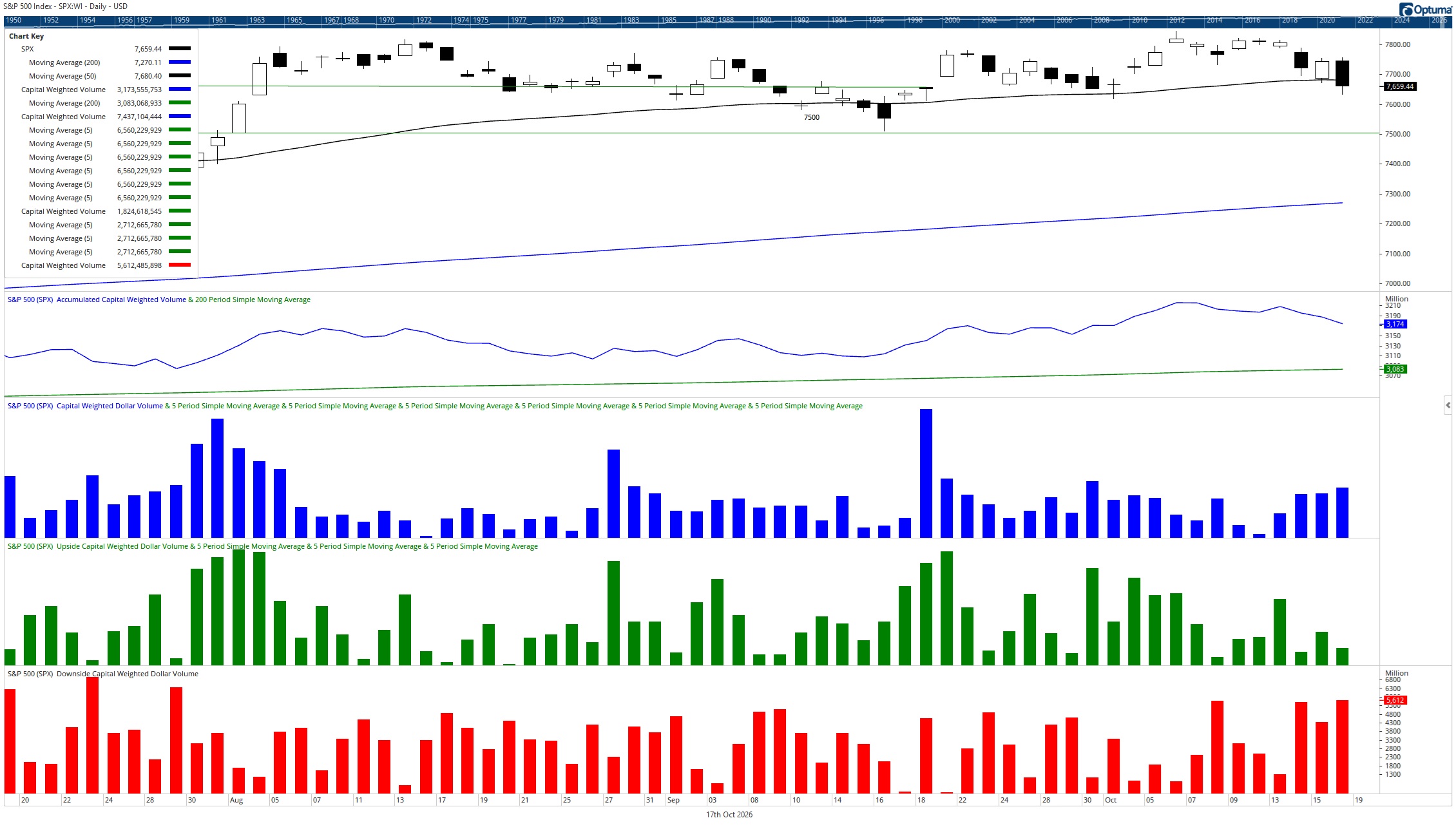
Monday began with barely enough activity to wake the sentries. Price changed little, and volume was exceptionally light. That quiet did not last. As the S&P 500 weakened, trading activity increased, with approximately 75% of Capital Weighted Volume directed to the downside in each of the final three sessions.
For the week, total volume averaged with about 60% of Capital Weighted Volume to the downside and a similar share of Capital Weighted Dollar Volume classified as outflows. The weekly average therefore concealed an important change in character. Selling pressure became more assertive as the week progressed. The bears did not arrive with overwhelming force on Monday, but they brought reinforcements before Friday’s close.
A pullback on diminishing activity may represent a market catching its breath. A decline accompanied by expanding activity deserves closer inspection. This week moved away from the quiet consolidation scenario and toward a more active test of sponsorship, although one week does not establish a full liquidation campaign.
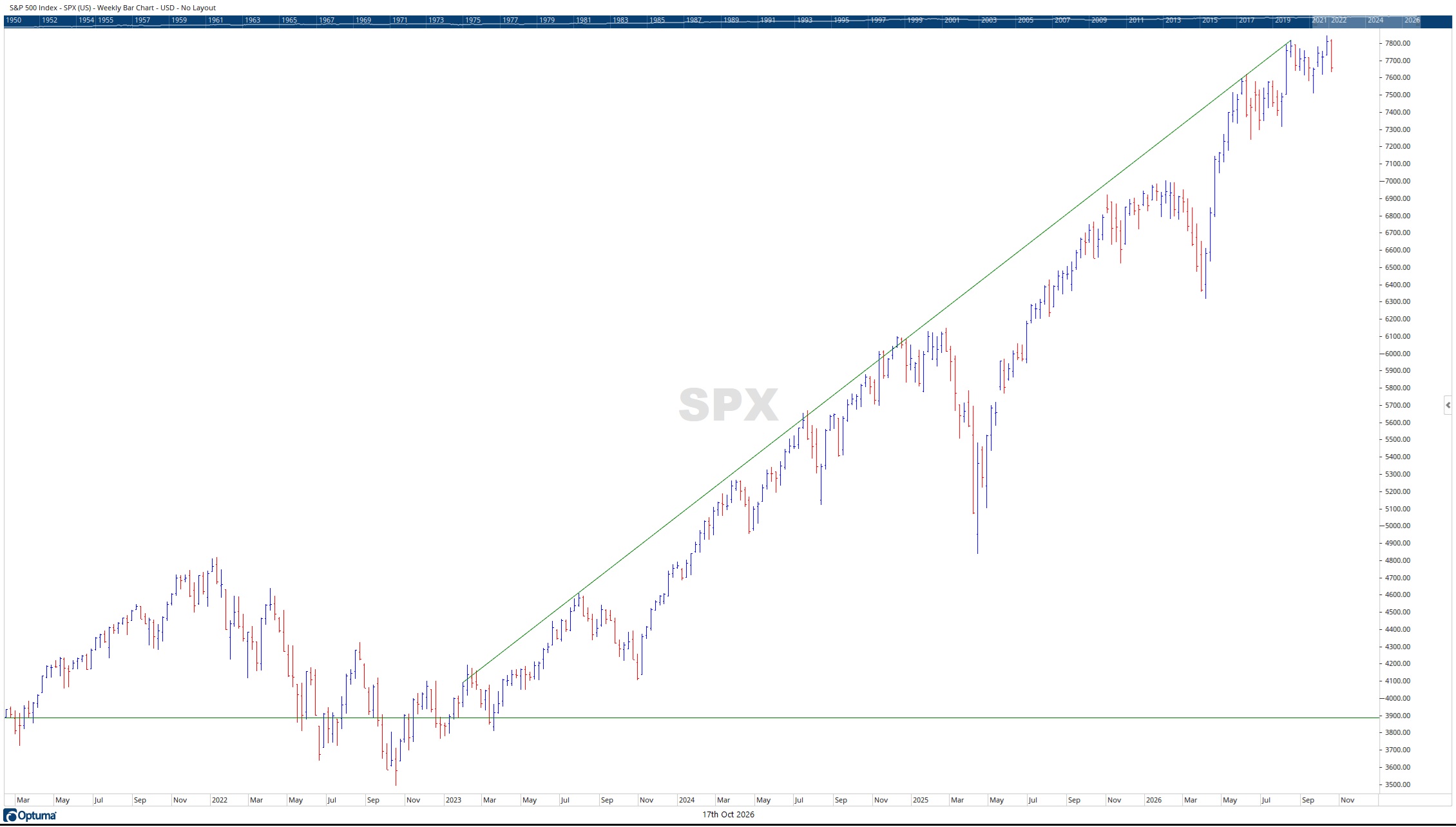
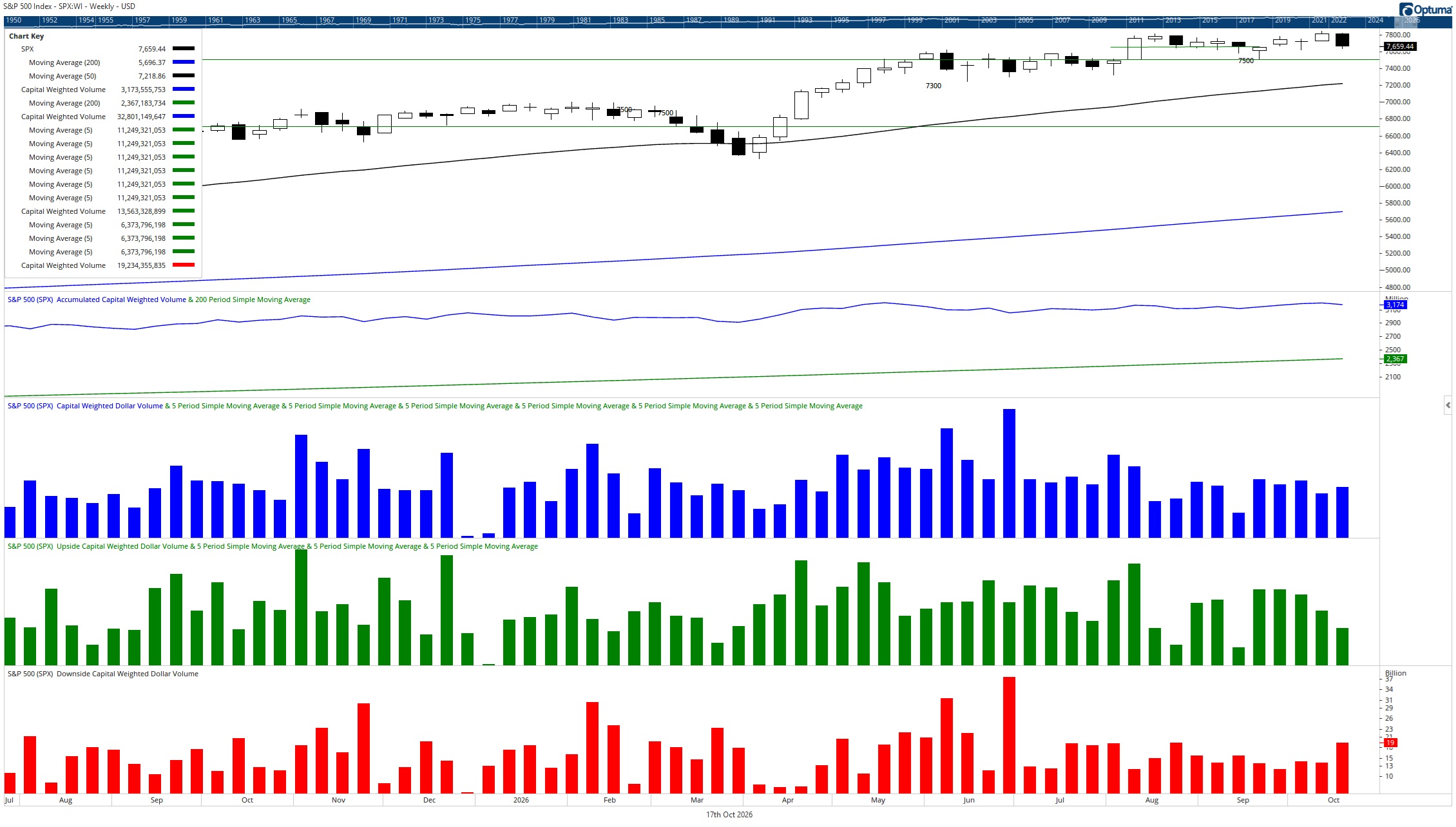
The S&P 500 finished at 7,659.44, slipping beneath its 50-day moving average near 7,680. Reclaiming that average would help repair the immediate position. Below it, 7,600 remains the nearby defensive line, followed by the more consequential 7,500 support zone. The bulls still have ground to defend, but their margin for error has narrowed
A Change of Command
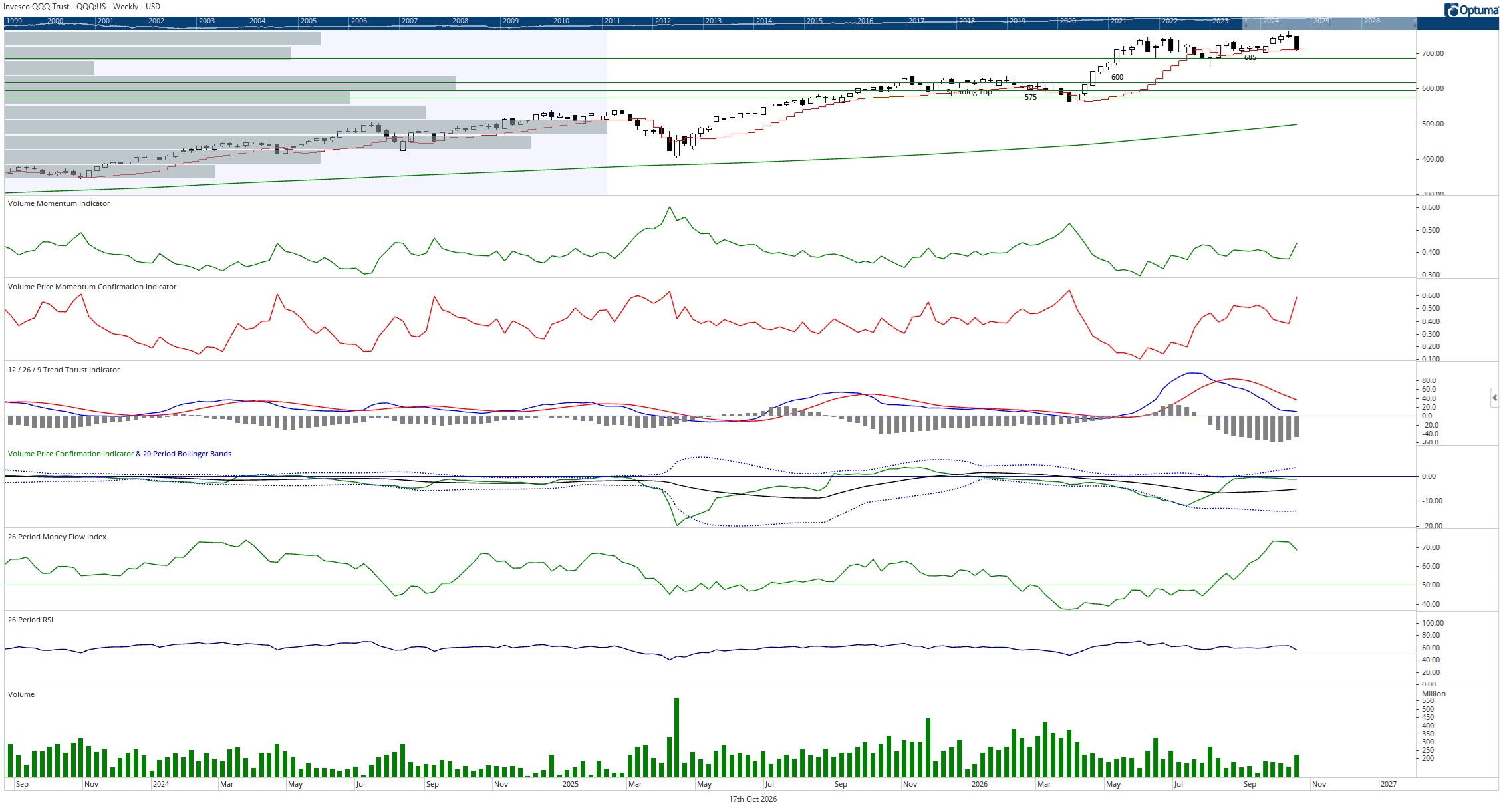
The generals, represented by the Invesco QQQ Trust, Series 1 (QQQ), declined -5.52%, closing lower each session and surrendering much of their September advance. The retreat was persistent rather than confined to a single ambush. Finishing near 710, the generals now face a familiar assignment. The 685 level remains an important short-term defensive position, while the intermediate trend near 670 represents another significant line to protect. Last week’s discussion centered on holding a breakout above 750. This week, the mission shifted from extending the advance to maintaining the bullish formation.
The troops, represented by the iShares Russell 2000 ETF (IWM), fell -3.05%. More concerning than the weekly loss was their break beneath the intermediate uptrend established in April 2025. Unlike the generals, who retreated toward support, the troops lost an important piece of their supporting structure. A prompt recovery of that broken trend would improve the field report. Continued trading beneath it could leave the small-cap flank exposed.
Meanwhile, the lieutenants, represented by the Invesco S&P 500 Equal Weight ETF (RSP), gained 0.49%. The dividend brass commanders, represented by the Schwab U.S. Dividend Equity ETF (SCHD), delivered the strongest performance, advancing 3.96%. While the generals looked for cover, the brass polished their gritty credentials.
This divergence is central to our broadening framework. Weaknesses in the largest growth companies did not translate into losses across every regiment. Equal weight equities held their ground, and dividend equities advanced decisively. That is consistent with selective rotation rather than an indiscriminate withdrawal from equities. However, the troops’ breakdown prevents us from declaring that the entire broader market has regained its footing.
Broadening, but Not Yet a Unified Front
Our midyear outlook emphasized the difference between leadership risk and market risk. The most crowded leaders can struggle while opportunities develop elsewhere. A healthier transition would allow the generals to digest their gains as other units strengthen, with volume confirming the handoff. A less favorable transition would see selling pressure overwhelm both the leaders and their intended replacements.
This week offered evidence on both sides. The strength in dividend and equal weight equities was constructive. The expanding selling pressure and loss of small-cap trend support were not. The NYSE Advance-Decline Line also paused, a welcome interruption to its retreat, but stabilization is not the same as a renewed advance.
There is an important counterweight to the caution. The longer-term Capital Weighted Volume index has pulled back from its recent highs, but it remains above its rising trend. The strategic supply line remains intact, even as the tactical position has weakened.
This is no longer a young bull market that can be judged solely by the speed of its leading division. In our framework, a more durable mature advance requires a stronger core and wider participation. The belly of the market showed strength this week, but the legs still need attention. An army cannot march indefinitely with its troops moving backward.
The Commodity Scouts
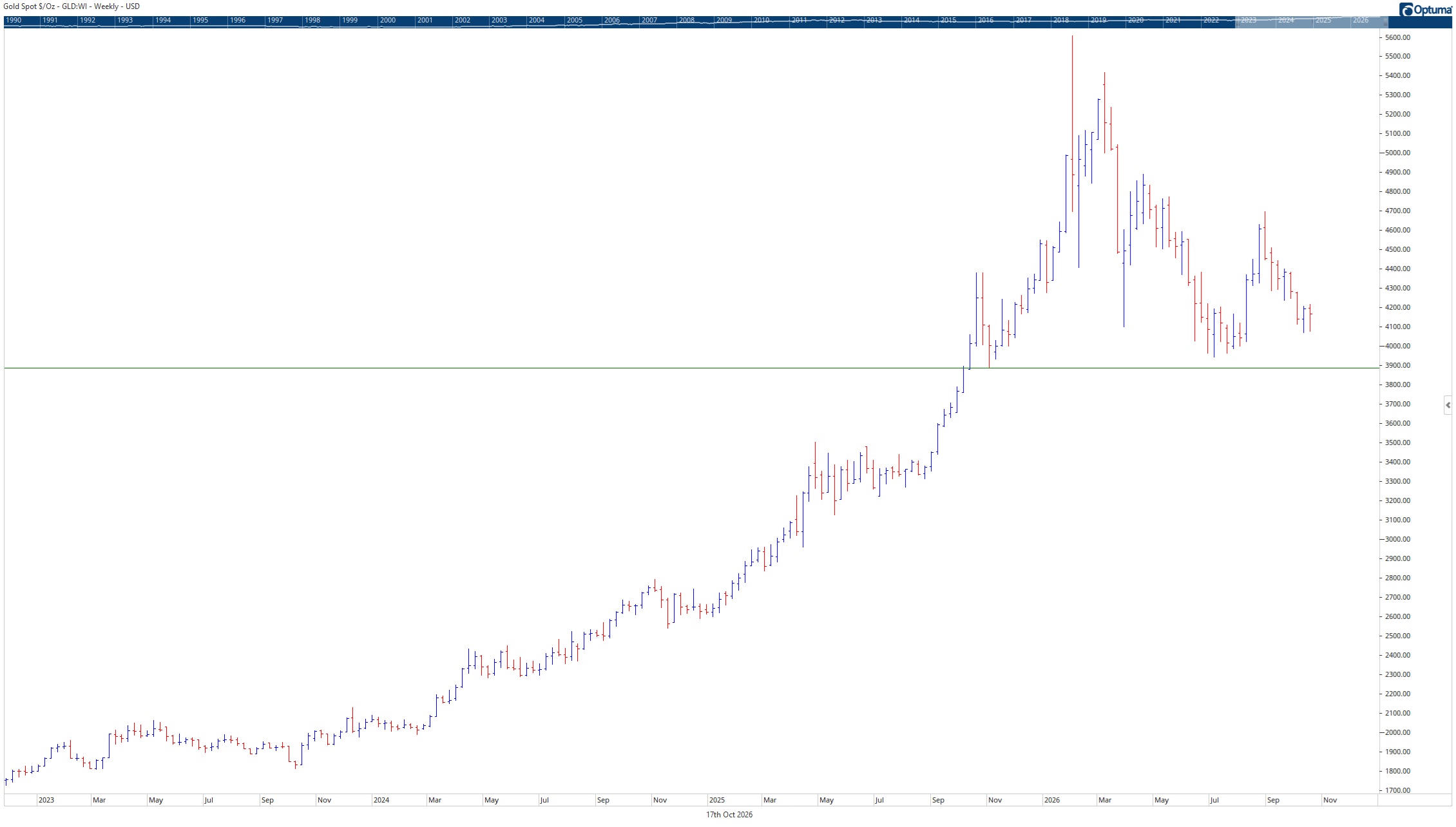
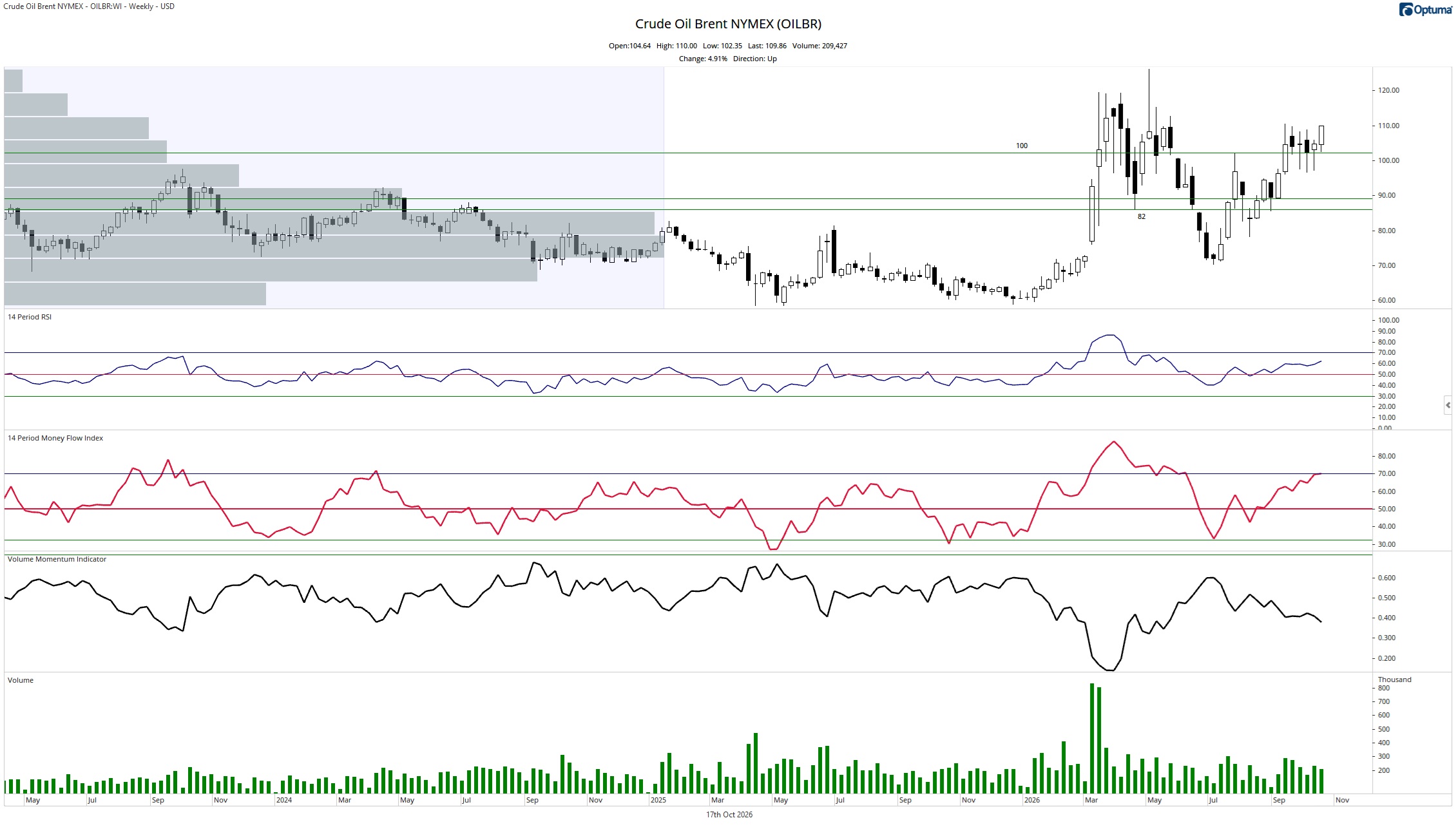
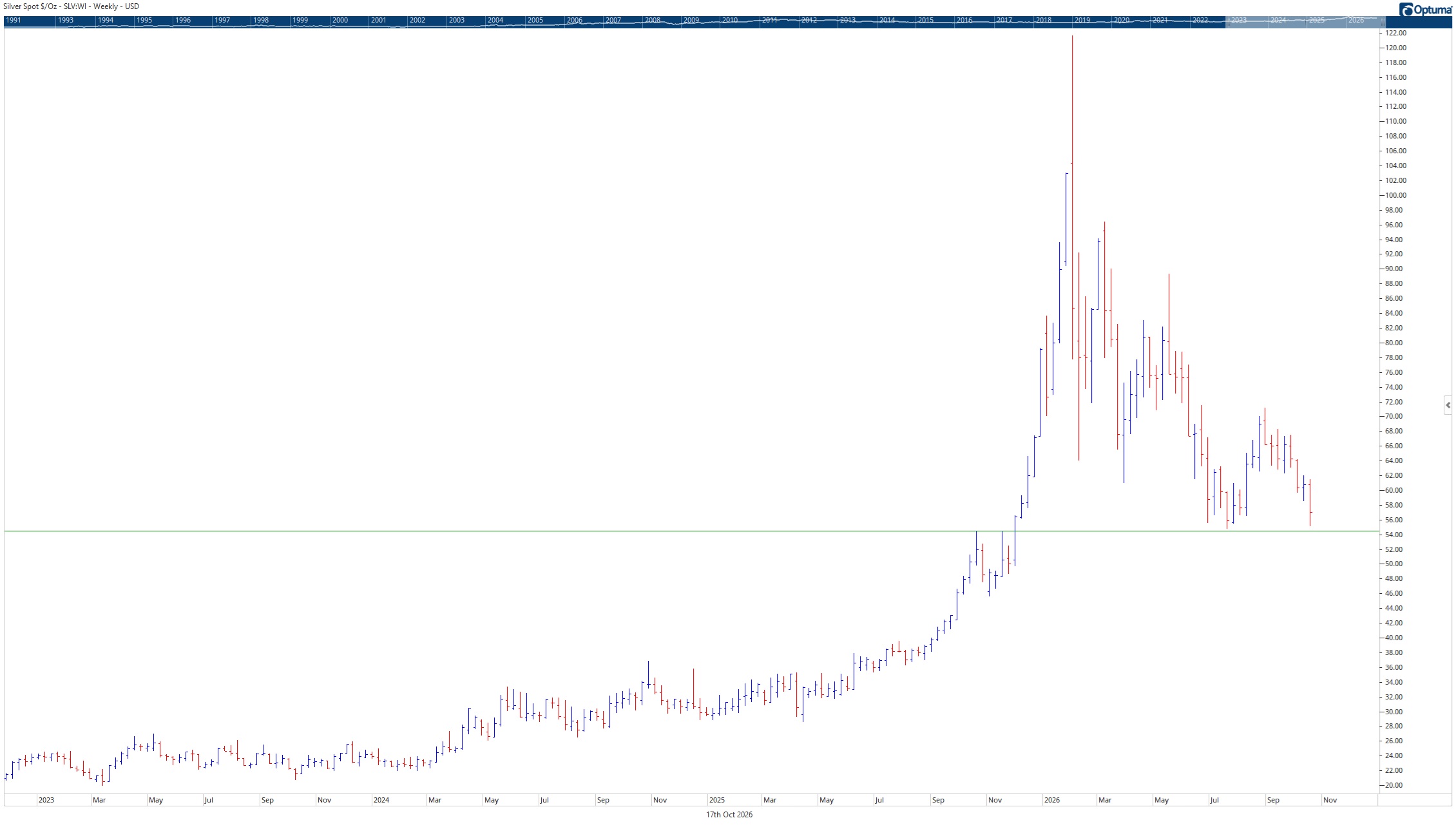
Gold remained contained within the previous week’s range, offering neither a decisive breakout nor a fresh breakdown. Silver lost more of its luster, retreating toward the support area just above $54. That leaves silver at an important defensive checkpoint, where holding the line would be constructive, but a sustained breach would weaken its recovery prospects. Brent crude advanced 4.91% to approximately $109.86, approaching the upper boundary of the channel established around September 11 without decisively clearing it. The energy scouts reached the perimeter, but they have not yet secured the territory beyond $110. Meanwhile, the dollar lost ground and failed to extend the prior week’s bullish breakout, another reminder that breaking through a line and holding it are separate assignments.
Risk Command
The central question is whether this becomes a constructive change of leadership or a broader deterioration in market character. A rebound in the generals that holds support, a repair of the troops’ broken formation, and continued strength in the lieutenants and brass would favor a healthier rotation. Persistent downside volume, further support failures, and renewed deterioration in breadth would argue for a more defensive assessment.
Our approach remains to manage exposure according to the evidence, not to defend a favored narrative. Position sizing, diversification, and predetermined risk thresholds remain essential. Strength in one regiment should not excuse a broken formation elsewhere, just as weakness in the generals should not automatically erase the resilience of the broader core.
For now, the brass has earned recognition, not an all-clear. The bulls need to defend the S&P 500’s nearby support, the generals need to stabilize, and the troops need to find their footing. Price is the market’s testimony. Volume is the polygraph. Our task is to keep listening when the testimony becomes less comfortable.
The dojis marked indecision, a pause in the counter trends. This week’s action began answering our question, but the verdict on a healthy leadership handoff remains open. A stronger core is encouraging, yet it cannot excuse broken support elsewhere or selling pressure that gathers strength. Our command posture remains disciplined: respect support, manage position size and concentration, and require confirmation before committing additional capital. The objective is not to predict every change of command. It is to recognize when the evidence changes and to mitigate risk.
Grace and peace,
BUFF DORMEIER, CMT
Updated: 10/19/2026. Historical references do not assume that any prior market behavior will be duplicated. Past performance does not indicate future results. This material has been prepared by Kingsview Wealth Management, LLC. It is not, and should not, be regarded as investment advice or as a recommendation regarding any particular security or course of action. Opinions expressed herein are current opinions as of the date appearing in this material only. All investments entail risks. There is no guarantee that investment strategies will achieve the desired results under all market conditions and each investor should evaluate their ability to invest for the long term. Investment advisory services offered through Kingsview Wealth Management, LLC (“KWM”), an SEC Registered Investment Adviser.